(click for more info)
Spaces for Orientation – Design Education in Precarious Times
Symposium: May 12, 2026, 11:00–18:00 (public)
Workshop: May 13, 2026, 10:00–15:00 (students only)
Design exists in a permanent state of reciprocity with social structures, power constellations, and inequalities. It is shaped by them and simultaneously reproduces them – yet it also carries transformative potential. This ambivalence lends design a particular agility while placing design pedagogy in an ongoing negotiation of its own identity and legitimacy. The central discourse revolves around what contemporary design can – and should – achieve under present conditions.
The profound upheavals of our time are unmistakable. The climate crisis, geopolitical conflicts, autocratic tendencies, and the increasing fragmentation of social lifeworlds destabilise established social and political orders. At the same time, trust in institutions that are meant to ensure continuity, dialogue, and democratic stability is eroding. The growing use of artificial intelligence in design practice further intensifies these tensions by transforming productive processes and reopening normative questions of authorship, responsibility, and the common good.
In such a dissonant present, the social and economic continuities to which concepts such as development, maturity, or professional orientation traditionally refer are dissolving and cannot be conveyed in education.
Against this backdrop, the symposium asks what role design education can play as a space for orientation and critical reflection. In what condition do students encounter these transformations? What competencies and dispositions do educators require in order to remain capable of acting under conditions of permanent change? How can higher education live up to its claim of not merely mirroring social reality but also serving as a physical and mental space of protection and possibility? And finally: What significance does design itself hold within design education – as method, as stance, and as an epistemic practice?
Address:
Braunschweig University of Arts (Aula)
Johannes-Selenka-Platz 1
38118 Braunschweig
| Day 1 – Symposium (public) | ||
|---|---|---|
| Arrival | 10:30–11:00 | Arrival |
| 11:00–11:20 | Introduction Claudia Doms & Anna-Luise Lorenz | |
| Panel 1 (Institution) | 11:20–12:00 | Marion Kliesch – Who gets to learn*teach design? |
| 12:00–12:40 | Krishan Rajapakshe – Kitchen as a Counter-Institute. On the Practice of Knowledge and Emancipation | |
| 12:40–13:00 | Q&A | |
| Lunch Break | ||
| Panel 2 (Individuum) | 14:00–14:40 | Ren Loren Britton – On: Collective Access |
| 14:40–15:20 | Nina Paim – Feel We Must: The Case for Narrative Design Writing | |
| 15:20–15:40 | Q&A | |
| Break | ||
| Panel 3 (World) | 16:00–16:40 | Silvio Lorusso – The Onslaught of the New |
| 16:40–17:20 | Noemi Biasetton – The School is a Battleground. Field Notes on Design Teaching from the Permacrisis | |
| 17:20–18:00 | Closing Discussion | |
| Break | ||
| From 18:30 | Get-Together with Snacks & Music | |
| Day 2 – Workshop with Ren Loren Britton (students only) | ||
|---|---|---|
| Workshop | 10:00–12:00 | Workshop Part 1: Between Access Riders & Collaboration Agreements |
| Lunch Break | ||
| Workshop | 13:00–15:00 | Workshop Part 2: Between Access Riders & Collaboration Agreements |
| Bye! | 15:00–15:30 | Good-bye |
Organised by Claudia Doms (Guest Scientist at the Institute for Visual Communication) and
Anna-Luise Lorenz (Acting Professor for Media Design / Multimedia)
Website: Insa Deist
Student Support: Finn Adler (Tech), Charlotte Jostes (Get-Together), tba (Music)
Institute For Visual Communication
HBK Braunschweig
Contact:
Claudia Doms
Anna-Luise Lorenz
Address:
Braunschweig University of Arts (Aula)
Johannes-Selenka-Platz 1
38118 Braunschweig
(click for more info)
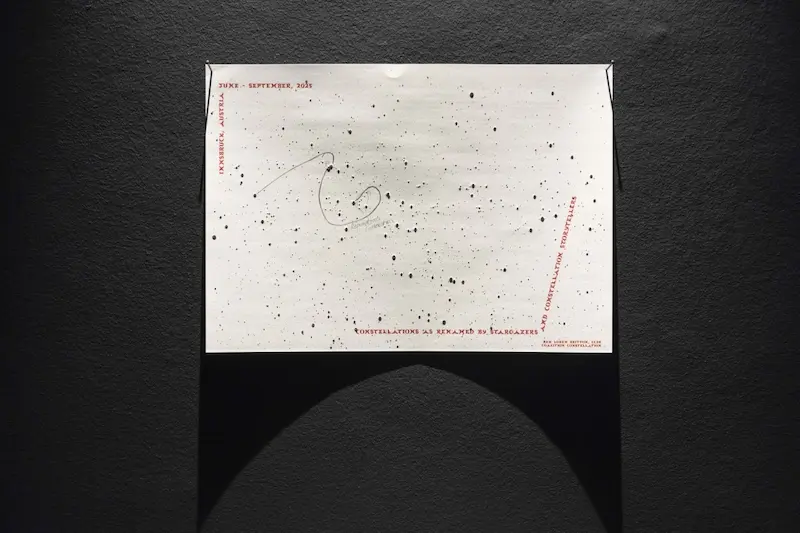
Ren Loren Britton is a trans*disciplinary artist-designer who reverberates with trans*feminism, technosciences, radical pedagogy and disability justice. Trans*feminist technoscience in their work follows the long wiggle of cyberfeminism; focusing on trans*, as in, transgender and trans*, as in, crossing contexts with feminist concerns. They are interested in the ways that socio technical systems & media makes lives accessible and pleasurable. Departing from the understanding that we live in an ableist white supremacist world, and therefore to be able to follow a justice oriented direction, their work begins from the assumption that we must rethink the terms of who fits where in all places, all scales, with what friction (or not) and why. This set of considerations brings them to their interest in disability justice which upholds and values all non-normative bodies and minds. In this way their artistic research is often collaborative, focuses on reaching their named community (trans*gender and disabled people) and focuses on the critical technologies, narratives and media practices that have connected us in our shared non-linear futures, pasts and presents. This conceptual framework enables their practice often engaging hir-her-historical storytelling looking into under-attended to narratives that tell other stories about technologies and community connection.
http://lorenbritton.com/
Abstract: Beginning with Disability Justice activist, Imani Barbarin’s assertion that ‘Accessibility is Imagination in Practice’; this lecture sketches one perspective of what Disability Justice in pedagogical and collective practice can be. Disability Justice is a political framework and community practice that produces desire and practices for worlding with all non-normative bodies and minds. Sharing practices that enable imagination, enable trans*femme and crip & Disabled access and prompt us to consider and re-consider questions of collective authorship. The lecture will speak through how disability justice informed pedagogies can enable collective practices of work that are actually accessible to all of us. The all here meaning those of us from varying class backgrounds, experiences of racialization, Disability, queer & trans* experience, migration hir-his-her-stories and more. In this lecture, Ren will share the methods, outcomes and ongoing processes that emerged during their guest professorship with the Studiengruppe Information Design / Kommunikationsdesign at the Burg Giebichenstein University of Art and Design in Halle.
Access: The lecture will be in the English spoken language with an Access Copy including an informal translation into German. The lecture will be recorded and shared online afterwards for a-synchronous access. There will be no sign language interpretation for this lecture.
Abstract: This workshop picks up on two design intervention based documents, Access Riders and Collaboration Agreements. Access Riders are a document that disabled, trans* and neurodivergent community members send to institutions of all scales ahead of a collaboration so that they can share what is needed negotiating the realities of ongoing harm within normative anti-trans and ableist conditions. Collaboration Agreements are documents set up when community members give inputs to arts and design projects so that authorship, rights, crediting, representation and financial outcomes can be agreed upon and negotiated before a project takes place — they intend to interrupt extraction and produce good relationships. This workshop looks at these two practices and attempts to design with participants a third sort of document that is somewhere between articulating needs and articulating authorship paradigms, proposing that the two frameworks are more similar than they might seem from the start.
Access: The workshop will be in the English spoken language with an access copy and schedule shared at the start of the workshop. Informal translation into German, and German and English references for thinking with will be shared. There will be no sign language interpretation for this workshop. We will take breaks, a low sensory space will be available and names, pronouns and further access needs will be welcomed to be shared at the beginning of the workshop. For any access questions ahead of the workshop please do write to the organizers.
The contemporary Western design school occupies an increasingly contradictory position within the neoliberal restructuring of higher education, functioning as a site of ideological reproduction while naturalising market values under the guise of creative autonomy. Starting from Barbara Kruger’s famous artwork, the school is understood as a body that – under specific political, social, and cultural conditions – becomes a battleground for thought and action. Drawing mainly from Gramscian thought, the presentation explores militant pedagogies that refuse the reduction of teaching to the transmission of competencies, instead reclaiming it as a practice of critical and political intervention to shape the school-body within the current state of permacrisis.
de*sign, re*search, learn*teaching. Marion Kliesch is a designer. Her work operates at the crossroads of communication, and she enjoys adopting a mediating role between apparent areas of tension: craft and theory, the individual and the collective, amateurism and expertise. She sees herself as a facilitator, mentor and moderator – both for content and for people.
She regards design as a critical and collaborative process, with a focus on experimental printing, publishing, language and text, as well as forms of collaborative learning. Playful experimentation has a firm place in her practice.
For Marion, learning and teaching are inextricably linked and central driving forces behind her work. She embarks on a journey of discovery and remains a learner herself.
Following her studies in Bremen and Berlin, she held positions at Burg Giebichenstein and the HBK Braunschweig. Since 2024, she has been Professor of Typography at the Academy of Finde Arts Leipzig (HGB).
https://www.instagram.com/marion.kliesch/
Despite their progressive potential, art and design schools often remain surprisingly homogeneous, selective, and inflexible. This talk is a personal reflection on these contradictions – focusing on questions of access, power, and canon. It introduces three programs that explore what happens when design education moves beyond its usual confines.
The "Academy for Transcultural Exchange" (AtA) at the Academy of Visual Arts Leipzig is a programme for people with refugee experience. Initiated by students in 2016, it opens access to the school while bringing transcultural perspectives into the institution – revealing both its transformative potential and its structural limits. ["ATA“ is run by a commission of university staff and students]
"forms of peering" is a free online learning programme by the open book society that brings together people from diverse backgrounds and experiences who share a curiosity about publishing, book design, and typography. It is built on the principle of each one teach one where small peer constellations work in horizontal exchange. At its core is the question of who produces, shares, and makes knowledge accessible. ["forms of peering" is a collaboration between Helene Otto, Jasper Otto Eisenecker and Marion Kliesch]
"Learning from Volkshochschule" draws on an institution anchored in the German constitution since 1919. Volkshochschulen stand for democratic education, accessibility, and hierarchy-free lifelong learning. In doing so it opens up spaces that art schools often keep closed. The Volkshochschule serves this project as a subject of research as well as a concrete site of inquiry – taking shape through the programme "gestalten – kreativ + kritisch“ at the VHS Halle (Saale). ["Learning from Volkshochschule" is a collaboration between Sanna Schiffler, Peter Hermans and Marion Kliesch]
Together, these programmes ask: Who gets to learn or teach design? What should design (education) be? And by whose standards?
Photo: Lilly Urbat
Silvio Lorusso is an Italian writer, artist and designer based in Lisbon, Portugal. He published Entreprecariat (Onomatopee) in 2019 and What Design Can’t Do (Set Margins’) in 2023. Lorusso is an assistant professor at Lusófona University in Lisbon and a tutor in the Information Design department at Design Academy Eindhoven. He holds a PhD in Design Sciences from Iuav University of Venice.
https://silviolorusso.com/
In this talk, Silvio Lorusso reflects on extracurricular initiatives, micro-grants and self-organized student activities as spaces where education can briefly reconcile authority and autonomy. Drawing on his professional experience, he argues that what holds a community together is not spontaneity alone but structure: shared rules, rhythms, and forms of maintenance. Against both managerial rigidity and the romanticization of chaos, Lorusso proposes that schools should preserve legible structures while also enabling students to build and reshape structures of their own. Extracurricular activities thus become a key interface between institutional authority and collective experimentation.
Photo: Nanako Ono
Nina Paim is a designer and publisher based in Porto. Born and raised in Nova Friburgo, Brazil, she has lived in France, Germany, Switzerland, and Portugal. These moves have sometimes brought feelings of isolation, but they also led her to seek out community and build an international network that is now central to her practice. She is especially interested in how books, exhibitions, and events can create spaces where people meet, share, learn, and change together. Her work focuses on directing, supporting, and collaborating – mainly through her roles as a curator and editor. She reflects on how ideas become practice, and how practice shapes ideas, drawing on her own path into feminist publishing.
Nina Paim holds a BA from the Gerrit Rietveld Academy in Amsterdam, the Netherlands, and an MA from the HKB University of Applied Sciences in Bern, Switzerland. A three-time recipient of the Swiss Design Awards, she has taught and lectured internationally. Her writing has been published by Occasional Papers, Les presses du réel, ESAD-IDEA, Aveditions, and the Korea Society of Typography. In 2024, she was awarded an honorary doctorate by the University of the Arts London.
https://www.ninapaim.com/
This lecture explores how an affective, vulnerable approach to narrative nonfiction can serve as a vital tool for critical design discourse. Framing design as an expansive, ontological practice that shapes everyday life, institutions, and systems of power, it argues that criticality must extend beyond access to academia to include who design research is written for and how it circulates. Drawing on feminist publishing histories, it positions publishing as both a material and political practice of making publics. It critiques the insularity of mainstream design media and academic publishing, whose limited circulation often restricts urgent research to specialist audiences. Through examples from independent publishing and editorial practice, the talk demonstrates how writing that is affective, vulnerable, and rooted in creative nonfiction can make design politics emotionally resonant and publicly accessible.
Photo: Matilde Cunha
Krishan Rajapakshe (b. 1984, Sri Lanka) is a Berlin-based artist whose practice begins with drawing as a structural condition of thought. The work expands into editions, textile environments, and installations as expanded drawings, and extends through self-publishing, community radio, kitchen-based collective formats, and a collective learning curriculum. Across these fields, the practice explores how desire, space, and subjectivity are shaped by migration, economic rupture, and everyday authority.
https://krishanrajapakshe.blog/
The kitchen is not a cooking class. It is a learning space that uses the kitchen as its site. Where knowledge passes hand to hand. Where it is normal to make something and give it away the same hour. I want to start here, with a room that already exists. A room that has been doing the work of an institute for a long time, without anyone calling it that.
I call the kitchen a counter-institute. Not as metaphor. The kitchen does what an institute does. It gathers. It archives. It transmits. It holds knowledge in trust. What it refuses is the gesture by which the institute makes itself an institute: the stamp, the certificate, the line drawn between who is allowed to know and who is not. To call the kitchen a counter-institute is to treat the knowledge inside it as knowledge. The question is how to recognise the kitchen itself as a site of legitimate thought. One that holds its own authority, without waiting for the older one to confirm it.
Photo: Rikke Glaser